
Adaptive AI Governance for Small Teams
If you are the operations leader fielding questions about AI use, waiting for a perfect policy can leave employees guessing while tools and integrations spread. That uncertainty can expose sensitive information, create inconsistent decisions, and make useful experimentation harder to defend.
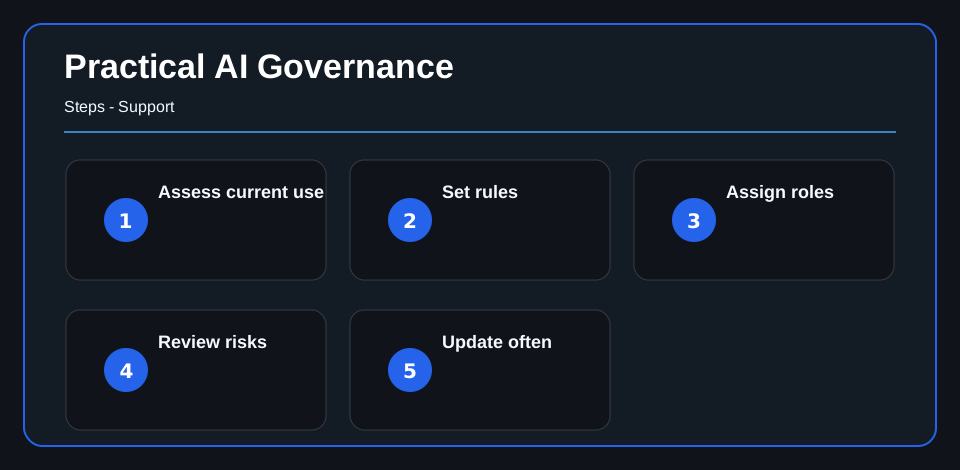
AI governance does not have to start as a large committee. Begin with a current list of uses, plain rules, assigned business and technical roles, and a review process that changes as access or impact changes. The goal is to keep useful work moving without letting the controls fall behind.
Assess what is already happening
Most teams have more AI use than they think. People test writing assistants, support tools, workflow automation, reporting helpers, and embedded AI features inside everyday software.
Start by recording current AI uses, what data is involved, who owns the tool, and what business process it supports. That gives the team a current-state view before it writes new rules.
Set principles and plain rules
Governance works better when rules are connected to principles. A small team might decide that AI use should be accountable, limited by role, reviewed when it touches sensitive data, and monitored when it can act inside business systems.
Policies should define purpose, scope, terms, acceptable use, and the risks the rule is meant to reduce. Plain language matters because people need to know what they can do without turning every question into a project.
Assign roles
AI governance is not only a compliance job. Planning, setup, testing, monitoring, and retirement all need ownership. Even in a small business, someone should own the tool, someone should understand support impact, and someone should know when risk needs review.
When ownership spans everyday support, access, and system administration, Managed IT shows the related operating path. Scope and approval still need to identify which AI decisions remain with the customer.
Review risks as tools change
Adaptive governance means the rules can change as the tools and use cases change. A low-risk experiment may need more oversight if it gains access to systems, handles sensitive data, or starts making decisions that affect customers or operations.
Review should include the current use, desired future use, risk level, controls, and any action items needed to keep the tool safe and useful.
When the AI tool can act across systems, AI agent governance for small business teams goes deeper into owners, access limits, monitoring, pause rules, and review cadence.
What to do next
Pick the AI tools already in use and build a small governance table. Include purpose, business owner, technical owner, data, access, current risk, desired use, and next review date.
That simple habit gives the accountable operations lead a way to explain what is permitted, route exceptions, and keep adoption from becoming another unmanaged responsibility. For workflow design and human-review decisions, continue to AI Automation and Business Workflows expertise.