
Business-Aligned IT Strategy for Support Teams
If you lead an internal IT or support team, urgent requests can consume the capacity meant for improvements. Without a strategy leaders understand, roadmap work slips, recurring employee friction continues, and every new request competes on volume rather than business consequence.
Use the roadmap as the bridge between leadership priorities and support execution. It should explain what the team is improving, the employee or business consequence, who approves and performs the work, which dependency could block it, and how progress will be reviewed.
Business Context Comes First
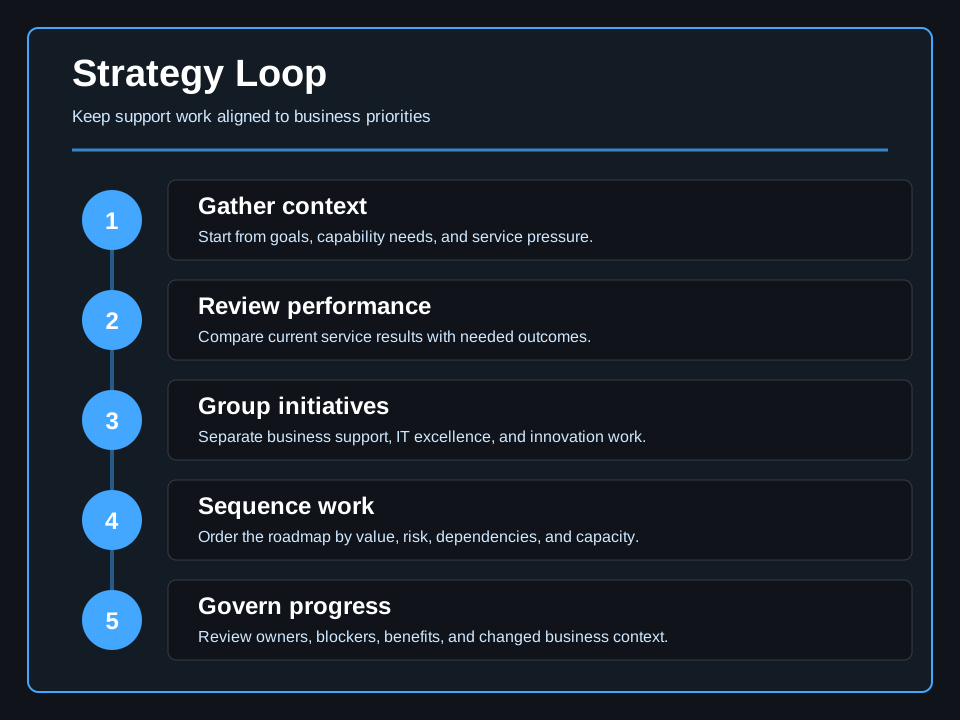
Start IT strategy with business goals, organizational initiatives, and capability needs. For a support team, the roadmap should reflect how the business operates, where service friction exists, and which technology changes would create the most value.
That context helps the team avoid scattered improvements. Support work becomes easier to prioritize when every initiative can be explained in business language.
Review Current Performance
Before building the next roadmap, review what happened in the previous period. Prior initiatives, service satisfaction, process maturity, budget performance, security confidence, and data quality are useful review areas.
The point is not to create a complicated scorecard. The point is to learn where the team is doing well, where service is weak, and where the business needs a different outcome.
Group Work Into Strategic Initiatives
Group IT work into business support, IT excellence, and technology innovation. This filter keeps operational fixes, security improvements, and future-facing work from competing in a single messy list.
Each initiative should have a clear purpose, owner, target outcome, dependency, risk, and cost or staffing impact. If those pieces are missing, the team may have an idea but not a plan.
Sequence The Roadmap
A roadmap should show when the work happens and how initiatives depend on one another. Compare initiatives by alignment, value, visibility, cost, mandatory pressure, dependencies, and risk, and record the reason for each rating.
That structure gives leaders a better way to make tradeoffs. Some work moves early because it supports a business goal. Some moves early because risk or mandatory pressure is high. Some waits because the team needs capacity, funding, or a prerequisite first.
Govern The Plan After Approval
Treat metrics, targets, budget, risk, stakeholder management, and strategy refresh as part of execution. That keeps the roadmap from becoming static.
A support team can keep governance simple. Review whether the initiatives are still relevant, whether owners are blocked, whether the expected benefits are visible, and whether new business context changes the sequence.
What To Do Next
Choose the business goals and service pressures that matter most right now. Use them to define a short list of initiatives, then add approval and delivery owners, expected outcomes, dependencies, evidence, and review dates.
For the operating model behind service ownership, standards, and review, continue to IT Operations and Management expertise. Strategy guides a decision; it does not remove the need to validate costs, capacity, risks, and technical assumptions for the actual environment.