
A Security Strategy Roadmap for Growing Teams
If you are the leader accountable for security priorities, every tool request, insurance question, customer requirement, and unresolved gap can arrive as a separate emergency. Without a roadmap, the loudest request can displace the work that matters most to operations, data, customers, or a committed deadline.
A security strategy should answer one practical decision: which improvements matter most for this business, what order should they happen in, and what evidence will show progress? It should not be only a list of products.
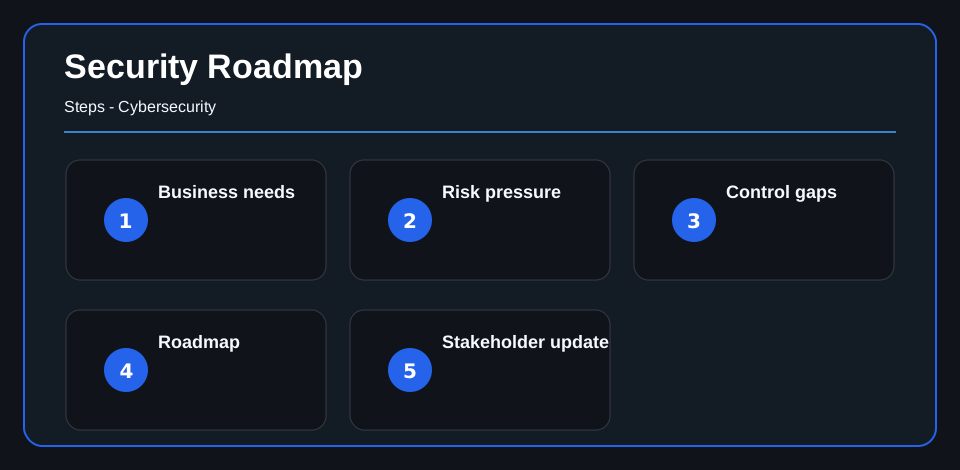
Start with business needs
Security priorities should reflect how the business works. Remote work, customer systems, compliance obligations, data sensitivity, support capacity, and growth plans all shape what the security program should protect first.
When requirements are clear, the team can avoid buying tools before it understands the problem.
Understand risk pressure
Risk pressure comes from changing technology, stronger threats, stakeholder expectations, and the organization’s own tolerance for disruption. A growing team needs to decide which risks are high enough to change the roadmap.
This is where plain risk conversations matter. Leaders do not need every technical detail, but they do need to know what could affect operations, data, customers, or cost.
Find the control gaps
A gap analysis compares the current security program to the target state. It helps the team see where controls, processes, monitoring, training, or ownership are missing or too weak.
For many small and mid-sized businesses, useful gaps may connect to penetration testing, computer monitoring, phishing readiness, backup review, or endpoint visibility.
If the roadmap includes outsourced monitoring, managed detection and response buying questions can help clarify outcomes, coverage, escalation, and service review expectations before a provider is selected.
If the team is also refreshing broader technology planning, a business-aligned IT strategy for support teams can help connect service work, roadmap sequencing, ownership, and review cadence.
Build a flexible roadmap
The roadmap should turn gaps into initiatives with owners, timelines, and communication. It should explain what will improve, why it matters, and how progress will be reviewed.
A roadmap does not have to solve everything at once. It should sequence work so the business can fund and complete improvements without losing focus.
For teams still shaping the broader IT plan, the guide on building a business-aligned IT roadmap before buying tools explains how to connect business goals, support pressure, security risk, owners, and review cadence before selecting new technology.
If those priorities include defense-contract readiness, the guide to CMMC compliance scope, evidence, and roadmaps shows how to define the boundary, collect proof, and turn gaps into owned remediation work.
For teams facing broader audit or regulatory pressure, turn compliance pressure into a practical IT action plan explains how to inventory obligations, map controls, prioritize initiatives, and keep evidence under review.
What to do next
Write down the business requirements and top security pressures, then choose the first three control gaps to close. Record who approves each priority, who performs the work, what dependency could block it, and what evidence will show completion.
For help assessing the decision and its boundaries, continue to Cybersecurity and Compliance expertise. A roadmap supports prioritization and readiness; it cannot guarantee security, compliance, or audit success.