
Service Desk Analytics Should Point to Root Cause
If you are the operations manager carrying employee escalations, your ticket system can tell you what happened. The harder job is deciding why the same interruption keeps returning and which fix will give people dependable time back.
Treat service desk analytics as a continuous improvement decision, not a scoreboard. The goal is not just to close tickets faster. It is to find repeated issues, identify likely root causes, assign practical fixes, and check whether employees experience fewer avoidable interruptions.
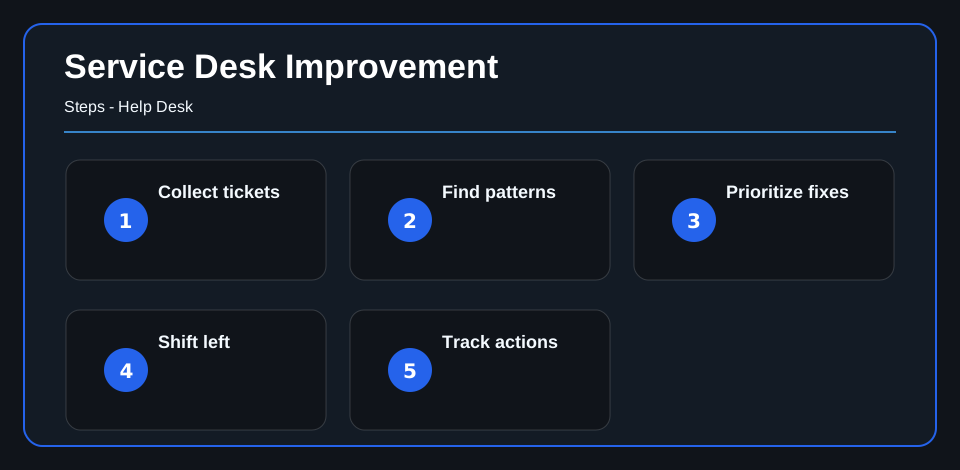
Start with ticket patterns
Service desks can generate a large volume of tickets. Inside that volume are patterns by category, department, application, location, device type, and recurring request.
Analyzing those patterns helps the team see where support time is going and which issues are creating the most friction.
Look for root cause
Repeated tickets often point to a deeper issue. It may be unclear documentation, a recurring software problem, confusing access, weak onboarding, poor training, or a system that needs a permanent fix.
Root-cause thinking changes the support conversation. Instead of only asking how quickly the ticket was closed, the team asks why the ticket keeps appearing.
Prioritize shift-left opportunities
Shift-left means moving resolution closer to the user or the first support touchpoint. That can include better self-service, clearer knowledge base articles, automation, training, or changes that prevent the ticket entirely.
Useful analytics help identify which repeat issues have the best deflection potential and which actions should be assigned first.
Give leadership an improvement story
Leadership needs more than raw ticket counts. A monthly service desk review should explain the top patterns, highest-impact fixes, satisfaction signals, cost or effort pressure, and assigned improvement actions.
Modern Workplace and End-User Support expertise explains the relevant judgment around employee experience, access, devices, and recurring support friction. If the need is a defined support path with intake and escalation, review the Help Desk Solution.
What to do next
Pick the top five recurring ticket categories from the last month. For each one, record the employee or business consequence, likely root cause, potential fix, owner, and evidence you will review after the change.
That gives the operations manager a practical improvement backlog instead of another report. Ticket patterns can suggest where to investigate, but they do not prove causation without review.
If intake, priorities, escalation, or knowledge capture are not yet consistent, start with the first 30 days of a better help desk before asking the data to support deeper optimization.